
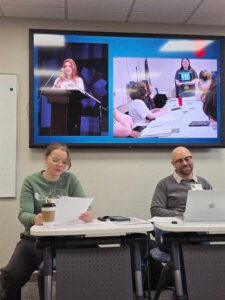
On Saturday, February 7 Melissa Helton and I gave a presentation to a room full of about 25 people at the Mildred Haun Conference. The conference, named after Tennessee author Mildred Haun, is a “celebration of Appalachian, literature, culture and scholarship” on the campus of Walters State Community College in Morristown, TN. Our two days there were full-to-the brim with the good company of new and familiar faces, presentations from peers, writing classes and a keynote speech from long-time friends of the Settlement and participants at the Appalachian Writers Workshop, hearty meals, open-mic poetry, and the beautiful singing and guitar playing of Dale Ann Bradley.
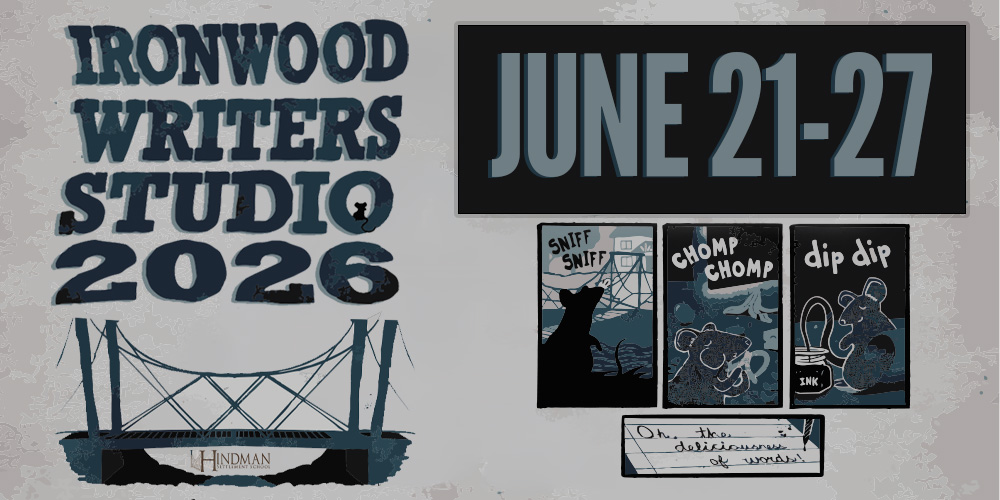
 The theme of this year’s conference was “Cookin’ up the good stuff”— open for interpretation within reason. Our presentation served to sing-out the value of Ironwood Writers Studio, our week-long summer writing camp for teenagers, both on our campus and in the wider Appalachian literary community; Ironwood is part of the good stuff we cook-up on campus. In my proposal to the conference coordinators, I put it this way: We support and believe in these young people and their writing as much as we do the people who have served as teachers and mentors at Ironwood alongside them. Through a simple reading and showcase of work from both groups, this presentation seeks to ignite the admiration and respect that we hold for our students and faculty in the audience who receives it.
I spent time leading up to the conference curating exactly what we would be reading, pulling from books published by previous Ironwood faculty and Still: The Journal features of students’ work (since the Still feature was what I had to work with, I decided it best to only choose poems for the faculty selections, though Ironwood students study across genres). For both categories, it was both easy and not to select what would be read. I meant what I said up there, that we believe in these young people’s writing.
Melissa and I passed out some literature on this year’s studio and traded off reading poems for the audience, with a slideshow of photos from different Ironwood studios playing behind us. It was 9:00AM, the start of the day, and we invited everyone in the room to listen to writers who come from the same places as themselves, writers across generations, express shared ideas through poetry: belonging, grief, introspection, desire, faith. All day after our program had concluded, people told us how impressed they were with everything they heard, and what a valuable thirty minutes it had been. I told them thank you, of course, but recognized (in the spirit curation) that our reading was a small part of what made that impression. These students, these teachers, and what is created when they meet during Ironwood—that confluence— is what was being thanked, honored, and acknowledged.
It was tempting to not broadcast to the audience whether they were hearing a poem by a student or by faculty— all established, published writers to differing degrees. The closer I read the students’ work while making selections, the harder it became to choose what would be read and my confidence in the goodness of Hindman as a place where young Appalachian writers can come to learn and practice their craft strengthened. This is good work. “Work” in the sense of the students’ writing, and “work” in the sense of what the Settlement’s Literary Arts programs do overall.
I was talking to a friend recently,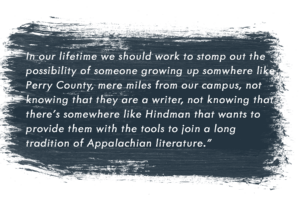 a writer from the region, about some aspects of my position at the settlement. He gave me a passionate charge, but a charge that I agree with: in our lifetime we should work to stomp out the possibility of someone growing up somewhere like Perry County, mere miles from our campus, not knowing that they are a writer, not knowing that there’s somewhere like Hindman that wants to provide them with the tools to join a long tradition of Appalachian literature. I hope what we presented demonstrated some of the work we’ve done in that effort.
I invite you to take in some of that work for yourself, and to be a part of it. Find the Ironwood features from Still here, here, and here. Read these names of the previous faculty whose poems we shared and seek out their writing if they are not familiar to you: Bernard Clay, Clinton W. Waters, Lacy Snapp, Torli Bush, Jim Minnick, Joy Priest. And if you know a young person interested in or already writing, point them our way. We’d love to welcome them in.
Peace, Love, and Ironwood
Clay Spencer


