
Winter Burrow
PRESENTERS & Sessions
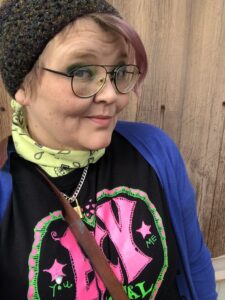 Misty Skaggs
Verna Mae Slone Keynote Address
Misty Skaggs is a barefoot poet, gravel road activist and outsider artist. She was born and raised in Elliott County, Kentucky where she is currently preparing a little plot of land her Papaw left to her as a forever homestead. Skaggs is a lead organizer and founding member of eKy Mutual Aid. She is also a well received author and her poetry book, Planted by the Signs, is currently available from Ohio University Press. She has lectured on Appalachian literature, done readings and workshops and shown her art throughout the region.
 Manuel Iris
Featured Writer
Manuel Iris is a Mexican-born American poet. Former Poet Laureate of Cincinnati, and Writer-in-Residence at both the Cincinnati Public Library and Thomas More University. A member of Mexico’s National System of Art Creators, his work has been published, translated, and awarded internationally. His 2025 book The Whole Earth is a Garden of Monsters won the prestigious Ambroggio Prize from the Academy of American Poets.
 Lacy Hale
Featured Artist

Concurrent Sessions
Join Melissa Benson, co-founder and board chair of Camp Beacon, as through storytelling and dialogue we reflect on how joyful, liberatory spaces for LGBTQ+ youth are created and sustained. We’ll dig into lessons from the field—project management, collective leadership, and accountability—to imagine and build communities rooted in care, courage, and co-creation.
This podcast provides a deep dive into the rich and complex world of Appalachian writers. It challenges stereotypes by featuring a diverse range of voices through interview and analysis that explore key regional themes. This podcast defines the region as from Southern New York to Northern Mississippi, featuring voices from classic authors to contemporary Affrilachian and women writers. The presentation will discuss the podcast, educational resources, and detail how to participate in the project.
The Settlement School’s Flood Recovery Archivist will open the doors to the Louisa St. Clair archive for those who want to browse the collection and learn more about how materials have been rescued and are still being cleaned and preserved after the destruction of the July 2022 flood.
Way up on a mountain in Letcher county, the Carcassonne Community Center is home to the longest running square dance in Kentucky. At Carcasonne’s monthly square dance, folks gather to dance in the Kentucky “big set,” a style unique to Eastern Kentucky. In this style, dances are done in one big circle as opposed to the traditional 8-person squares. Come be a part of Appalachian history and try your hand (feet, actually!) at Big Set dancing.
A brief exploration into the idea of Civic Imagination and how we can use it in our own writing and work with fellow creatives. Civic Imagination is a project dedicated to creating better futures through fiction. Its ideas can be applied to both poetry and prose and is an especially powerful tool when used collaboratively. We will explore the hopeful side of speculative fiction, the issues closest to our hearts, brainstorm ideas, and generate seeds for future projects with our fellow writers in this session.
This team will present the Crafting Legacy project with artwork curated from inside Appalachian prisons. We will discuss the history and legacy of Calls From Home, the priority of the Crafting Legacy project and include samples of essays/poetry and music collections that will also be a part of the project.
In my woodworking and writing, I reclaim what is often discarded, acknowledging its wonder and worth. There’s hope in this—nothing is too used or simple to inspire art. It invites us to approach ourselves similarly with a devotion to knowing no part is worthless or without the ability to be reclaimed. I’ll discuss my artistry, share some poems, and provide prompts for how to engage with the world, and yourselves, in a reclaimed way.
In this generative workshop, participants will explore poetry as a response to ecological grief, awe, and change. Through shared readings and guided prompts, we’ll write “field notes” that honor vanishing places and cultivate hope. No experience needed—just an open notebook and a willingness to witness, remember, and imagine.
The foundations of erasure poetry will be introduced and time will be given to producing a work of art based on a chosen text. All are welcome; no previous experience in poetry writing is necessary.
The presentation will include how the anthology Had I a Dove: Appalachian Poets on the Helene Flood came about and some of the adventures along the way, including advice on editing such a project and pitfalls to avoid. After a year of recovery from the Helene Flood, the poems included in the anthology helped me in my own processing and can show the way to finding hope.
In the 1970s, oral history projects were the “in” thing, and several were conducted in this area. One of the largest was the Appalachian Oral History Project, undertaken by four colleges in the area, including Alice Lloyd College. The ALC branch of the project was spearheaded by Ron Daley and Mike Mullins, and over 2000 tapes were collected. Now, through the use of modern technology, these tapes are once again bringing to life the stories of our ancestors in their own words. This session will discuss how modern technology, such as digital converters and AI tools, are helping preserve this wealth of cultural information for future generations of Appalachian researchers in multiple fields.
Critique is essential for all creatives, yet many are afraid of it. This session explores the difference between criticism and critique, addresses common fears around sharing, offers strategies for giving clear and compassionate feedback, and discusses how to receive feedback with hope. Writers and creators of all kinds are welcome.
A generative workshop blending short readings and guided writing prompts inspired by Testament: A Rural Anthology. Participants will explore place, memory, and resilience as acts of hope, ending with an optional read-back. Together we’ll celebrate storytelling as both a personal practice and a shared way of shaping the future.
This workshop will examine collections of folklore, fairy tales, and maybe a few old ballads. We’ll share examples of persona poems, as well as familiar narratives that wind through strange new places. How can our oldest stories help us renew our creativity and find new paths in the dark woods?
Listen to “Life Stories Told in Song,” original music written and performed by Melanie Turner and Kris Preston. Participants will be invited to listen, reflect, and share their own memories and connections as we explore how personal and regional history shape the songs we sing, preserve stories, celebrate community, and inspire hope.
This hands-on session will focus on using leftover materials to create cards, ornaments, and decor with the intention of gifting the new item to someone. An emphasis on using what’s available at the moment, something that is inherently Appalachian, is my goal with this session. Materials will be provided to enable participants to create an ornament or card or a small windchime.
This is a generative workshop broken into three mini-writing sessions in which participants will explore the layers of setting and how we place our characters (and ourselves) into a physical landscape, a mental landscape, and ending with how those landscapes shift whether that’s by design, by force, or for survival.
Members of the UPIKE’s English Club share their experiences as learners shaped by Appalachian place and community. In this moderated roundtable, they will explore what it means to study and create within the region and the futures they imagine for themselves and their communities.
This presentation explores the work done between Pennsylvania Western University’s Honors Program, Carlow University’s Mad Women in the Attic Program, and the Heinz History Center in Pittsburgh. Through this partnership, students and I have worked with local historical societies in Appalachia to help preserve and encourage access to the region’s history, serving more than 95 historical societies and organizations by creating digital stories using their collections in an attempt to interrogate stereotypes and to create a new narrative about the region.
Participants are invited to an informal session to hold space and converse about the challenges of writing while queer in our current political culture, and share how they keep hope alive. This session is intended as a safe space for queer writers to connect with one another, helping to foster relationships.
In this session, participants will receive an overview of docupoetics and learn how working from archival and historical material can foster a sense of hope and resilience. Participants will have a chance to use selected archival materials to create their own poetic works that speak to their hope for their region and the future.
Joy is a form of Resistance. In this session, participants can share how they find, cultivate, and/or maintain joy in a time where our very identities and values are under assault. Community building, activism, artistry, and mindfulness techniques will be part of the session.
Explore slow making as reflection. Participants will receive a bandana, choose a meaningful word, quote, or image, and learn basic embroidery techniques. No experience needed—leave with a hand-stitched piece and a break from technology.
We will discuss four tips to set up a pitch that attracts national editorial interest for regional stories out of Appalachia, from crafting the story in your head to selling it to the agent who will represent you. Learn to create exceptional, stand-out proposals that appropriately place Appalachian culture in the center of an enticing book-length work when prospecting for editors or agents. Craft a simple pitch that opens the world to understanding Appalachia as Appalachia presents itself, without stereotypes or false expectations.


